Conditions We Treat: Anorectal Malformations, Hirschsprung Disease, Constipation and Soiling
A pediatric colorectal surgeon treats conditions of a child's bowel, rectum and pelvis: anorectal malformations (imperforate anus), Hirschsprung disease, severe chronic constipation and fecal incontinence. Dr. Carlos A. Reck-Burneo treats these conditions as Chief of Pediatric Surgery and Pediatric Urology at University Hospital Brandenburg an der Havel in Germany. Consultations are available in English, Spanish and German.
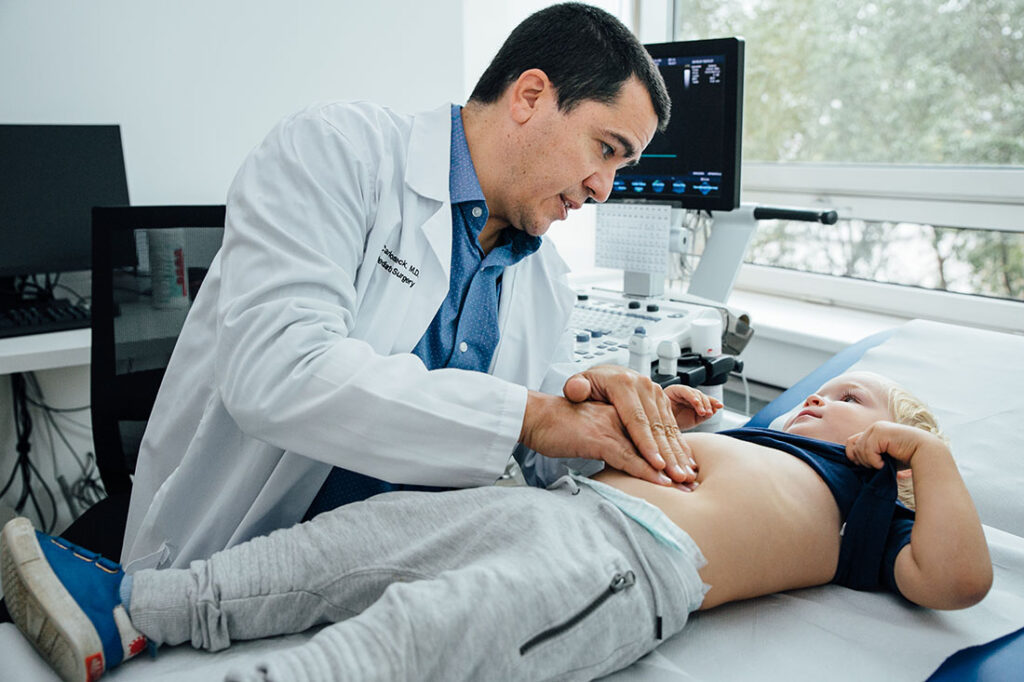
These conditions are rare, intimate and exhausting for the whole family. On this page you will find plain answers to the questions parents actually ask, and what the next step can look like.
What is an anorectal malformation (imperforate anus)?
An anorectal malformation (ARM), often called imperforate anus, is a condition a baby is born with: the anus and rectum have not developed normally, so the anal opening may be missing, too narrow or in the wrong position. ARM ranges from milder forms to complex malformations such as cloaca, and it can occur together with other congenital differences (VACTERL association). It is treatable with surgery.
Treatment usually begins in the newborn period. Depending on the type of malformation, the first step may be a temporary colostomy, followed by reconstructive surgery, most often a posterior sagittal anorectoplasty (PSARP), and later colostomy closure. Just as important as the operation itself is what comes afterwards: structured follow-up through childhood, so that constipation and soiling are recognized and treated early.
For children with ARM, Dr. Reck-Burneo offers diagnostic work-up, primary reconstruction, assessment after previous surgery elsewhere, bowel management, long-term follow-up and second opinions.
What is Hirschsprung disease?
Hirschsprung disease (also written Hirschsprung's disease) is a congenital condition in which nerve cells, the ganglion cells, are missing in the last section of the bowel. The affected segment cannot relax, so stool cannot pass normally. Typical signs in a newborn are a delayed first stool (no meconium within 48 hours), a swollen belly and feeding problems. The diagnosis is confirmed with a rectal biopsy.
The standard treatment is pull-through surgery: the bowel segment without ganglion cells is removed and healthy bowel is connected just above the anus. Most children do well, but some continue to struggle with constipation, soiling or episodes of enterocolitis after the operation. These children in particular benefit from follow-up at a specialized colorectal center.
For children with Hirschsprung disease, Dr. Reck-Burneo offers diagnostic evaluation, pull-through surgery, structured aftercare including bowel management, assessment of problems after a previous pull-through and second opinions.
When does constipation in a child need a specialist?
Constipation in children is common and usually improves with the standard treatment your pediatrician prescribes. It needs a specialist when it becomes chronic and treatment-resistant: when stool accidents, pain or withholding persist despite consistent therapy, when laxatives such as PEG (MiraLAX) seem to stop working, or when symptoms began in the first weeks of life. In these situations the cause should be reassessed, including rare conditions such as Hirschsprung disease or a colonic motility disorder.
Severe constipation is not a parenting failure, and it rarely resolves through pressure or potty-training discipline. What helps is a precise diagnosis and a plan that is adjusted until it works, which is the idea behind a structured bowel management program.
Why does a child soil their underwear (fecal incontinence)?
Most children who soil their underwear are not doing it on purpose. In the majority, softer stool leaks past a large, hard stool mass caused by chronic constipation; doctors call this overflow soiling or encopresis. True fecal incontinence, meaning the child cannot control the bowel, is rarer and usually related to a congenital condition such as an anorectal malformation, to spinal conditions or to previous surgery. Both situations can be treated. (British English: faecal incontinence, soiling.)
The first step is a structured evaluation to identify the mechanism. Based on this, treatment ranges from laxative regimens and enema programs to, in selected children, surgical options that make daily cleanliness achievable. The goal is a child who can go to school in normal underwear, with confidence.
For children with soiling or fecal incontinence, Dr. Reck-Burneo offers diagnostic evaluation, bowel management and second opinions.
Pediatric urology
The department in Brandenburg an der Havel combines pediatric surgery with pediatric urology, and its stated goals include the targeted expansion of pediatric urology alongside the development of a center for pediatric colorectal surgery and a strong newborn surgery service. For urological concerns, please contact the office directly.
Already had surgery, and problems persist?
If your child has had a pull-through, PSARP or other colorectal operation and still suffers from soiling, constipation, pain or repeated obstruction, this is worth a specialist reassessment. Redo situations are a core part of pediatric colorectal surgery, and seeking a second opinion is a normal step with rare conditions, not a sign of distrust towards your current team. You can request a consultation or second opinion and send your child's records by email.
Questions parents ask
My baby was born without an anus. What happens now?
A baby born without a visible anal opening has an anorectal malformation, also called imperforate anus. It is treatable. In the first days of life, surgeons make sure stool can leave the body safely, often through a temporary colostomy, and then plan reconstructive surgery such as a posterior sagittal anorectoplasty (PSARP). With experienced surgical care and structured follow-up, many children achieve good bowel control. Ask early for a team experienced in anorectal malformations.
My newborn is not passing meconium. Could it be Hirschsprung disease?
If a newborn does not pass meconium, the first dark stool, within the first 48 hours of life, doctors should rule out Hirschsprung disease, a condition in which nerve cells are missing in the lower bowel. Not every delayed first stool means Hirschsprung disease, but it is a warning sign that needs prompt medical evaluation. The diagnosis is confirmed with a rectal biopsy.
Why is my child leaking poop?
The most common reason a child leaks stool is severe constipation: softer stool seeps past a hard mass in the rectum, which doctors call overflow soiling or encopresis. It is not laziness and it is not the child's fault. Less often, soiling is related to a congenital condition or a previous operation. A structured evaluation identifies the cause and forms the basis for treatment, for example a bowel management program.
What if MiraLAX is not working for my child?
If standard laxatives such as PEG (known in the United States as MiraLAX) no longer control your child's constipation, do not keep increasing the dose on your own. Persistent, treatment-resistant constipation should be reassessed by a specialist: possible reasons include stool withholding, colonic motility problems and, rarely, an underlying condition such as Hirschsprung disease. Please discuss any change in medication with your child's doctor.
Our child still has problems after pull-through surgery. Can we get a second opinion?
Yes. Ongoing soiling, constipation or repeated bowel obstruction after pull-through surgery or PSARP are recognized reasons to seek a second opinion. Dr. Reck-Burneo reviews previous operative reports, pathology results and imaging, and gives you a personal assessment, including whether a redo operation or a non-surgical path such as bowel management makes sense for your child. You can send records by email in English, Spanish or German.
A note on medical advice
This page offers general information and cannot replace a medical examination. If your child has acute symptoms, for example a newborn who is not passing stool, vomiting or a swollen belly, please seek medical care without delay.
Back to home | How to reach us | Contact